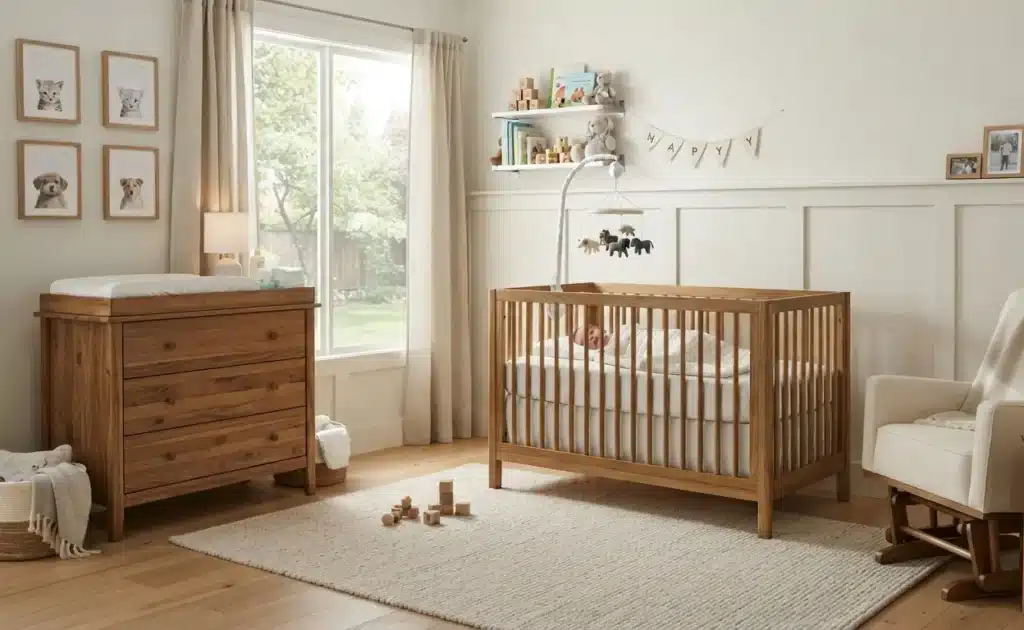
When designing a nursery, it’s easy for parents to focus on style, colors, and the perfect Pinterest-inspired look. However, nursery furniture safety is just as important as appearance. Many cribs, dressers, and changing tables are made with composite wood that may release formaldehyde and other volatile organic compounds (VOCs). Understanding these hidden materials is one of the most important steps toward creating a truly non-toxic nursery for your baby
The Hidden Danger of Composite Wood
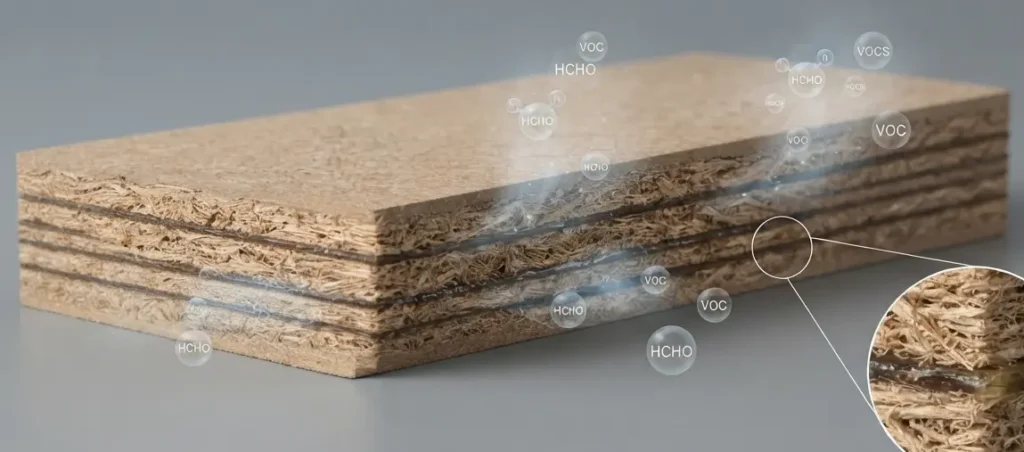
The most significant, yet frequently ignored, risk factor in modern nursery furniture is the widespread use of MDF (Medium Density Fiberboard) and PB (Particle Board). These materials have become industry standards because they are inexpensive, uniform, and easily shaped into the sleek, modern silhouettes that dominate current interior design. However, the manufacturing process behind these boards is a major concern for indoor air quality.
To create MDF or PB, manufacturers break down wood fibers and bind them together using heavy-duty glues and resins. These adhesives almost always contain formaldehyde, a known human carcinogen and a volatile organic compound (VOC). Over time, these materials undergo a process known as “off-gassing,” where the adhesive slowly releases chemical vapors into the air.
For infants and toddlers—whose respiratory systems are still rapidly developing and whose immune systems are far more sensitive than those of adults—this prolonged, low-level exposure is a serious health concern. Studies have suggested that indoor air pollution from composite wood can contribute to respiratory irritation, allergies, and potentially more severe long-term health complications for children who spend the majority of their early development inside these rooms.
Understanding the “Gold Standard” for Safety
When you are shopping for a crib, a changing table, or a dresser, do not rely on vague marketing claims like “eco-friendly” or “non-toxic” unless they are backed by rigorous, third-party verification. Instead, you must be a proactive inspector of product specifications. The most critical certifications to verify for any piece of furniture made of composite wood are:
- CARB Phase 2 (California Air Resources Board): California has long been a leader in regulating indoor air quality and chemical emissions. CARB Phase 2 establishes some of the strictest formaldehyde emission limits in the United States for composite wood products such as MDF and particleboard. Products that are CARB Phase 2 compliant have been tested to meet these regulated emission standards, helping reduce indoor formaldehyde exposure. To learn more about these requirements and how they apply to the furniture in your home, you can refer to the California Air Resources Board’s official Consumer FAQ.
- EPA TSCA Title VI: This federal standard requires composite wood products sold in the United States to meet strict formaldehyde emission limits through third-party certification. To learn more about these requirements and how they apply to composite wood products, visit the U.S. Environmental Protection Agency’s official Consumer FAQ.
Before you make a purchase, check the product’s documentation. If a retailer or manufacturer cannot provide documentation regarding CARB Phase 2 or EPA TSCA Title VI compliance, it is, in my professional opinion, safer to avoid that piece of furniture entirely.
Investing in Long-Term Wellness
In my experience with space planning and furniture selection, the gold standard for a healthy home remains the use of solid wood. Unlike composite boards, solid wood does not rely on synthetic urea-formaldehyde glues to maintain its structure. While solid wood furniture can carry a higher price tag, it is an investment in your child’s long-term health and the longevity of the piece itself. Solid wood is durable, repairable, and significantly better for your home’s indoor air quality.
If your budget or design constraints necessitate the use of manufactured wood, ensure that you are buying from reputable brands that prioritize transparency. Look for pieces that are FSC-certified (Forest Stewardship Council), which indicates that the wood is sourced from responsibly managed forests, and always cross-reference their emission certifications.
Your nursery should be a sanctuary—a place of growth, peace, and safety. By moving past the superficial “style” and digging deeper into the actual material composition of your furniture, you are taking a crucial step in protecting your child’s environment. True design excellence is not just about how a room looks; it is about how it supports the health and wellbeing of the people who live within it. Never compromise on safety; your child’s environment is the foundation of their future.