Have you ever looked at a built-in cabinet and thought, “Something just feels off”—even though you couldn’t explain why?
I’ve had that feeling more times than I can count. Sometimes the materials are expensive, the finish is flawless, and the installation is perfectly done. Yet the cabinet still looks awkward. At first, I assumed it came down to color or style, but after measuring dozens of cabinet designs, I realized the real issue was usually much simpler: cabinet proportions.
One thing I’ve learned is that beautiful cabinets aren’t always about spending more money. In many cases, it’s the relationship between the width and height that makes the biggest visual difference. Even a high-end built-in cabinet can look unbalanced if the cabinet dimensions are out of proportion.
In fact, this is where tools like a cabinet ratio calculator become surprisingly useful. Instead of guessing whether something “feels right,” you can quickly check if the proportions are visually balanced before anything gets built.
That’s why I started using what I call the 80% Cabinet Proportion Method. It’s a simple way to evaluate whether a cabinet is likely to look balanced before it’s built. It’s not an industry rule or a complicated design formula—just a practical method I’ve found helpful after comparing many cabinet layouts and proportions.
In this guide, I’ll explain how the method works, share a few common sizing mistakes, and let you try a free cabinet ratio calculator to see whether your cabinet proportions are working in your favor before you start building.
Why Cabinet Proportions Matter More Than Size
One of the biggest misconceptions in cabinet design is that bigger automatically looks better. In reality, size alone has very little to do with how attractive a cabinet feels. What our eyes notice first is proportion.
Think about it for a moment. You’ve probably seen two built-in cabinets with almost the same cabinet dimensions, yet one looks clean and balanced while the other feels strangely tall, narrow, or bulky. Most of the time, the difference isn’t the material, color, or hardware—it’s the relationship between the width and the height.
Our brains naturally respond to balanced shapes. When a cabinet becomes too tall for its width, it can appear unstable or awkward, even if every measurement is technically correct. On the other hand, a cabinet that’s too wide may feel heavy and oversized, especially in smaller rooms. This is why experienced designers often spend more time adjusting proportions than simply increasing the size.
Another mistake many homeowners make is focusing only on storage capacity. It’s easy to think, “If I make it taller, I’ll have more storage.” While that’s true, adding height without considering the overall cabinet ratio can make the entire room feel less balanced. A cabinet should complement the space around it, not dominate it.
This is especially important for built-in cabinets, since they become a permanent part of the room. Unlike furniture, they aren’t easy to replace if something feels off later. Spending a few extra minutes checking the proportions before building can prevent an expensive mistake.
The good news is that you don’t need to be an interior designer to evaluate cabinet proportions. With a few basic measurements and a simple ratio, you can quickly tell whether a design is likely to feel balanced or whether it needs a few adjustments. That’s exactly why I created the 80% Cabinet Proportion Method—to make this process easier for anyone planning custom cabinetry.
The 80% Cabinet Proportion Method Explained
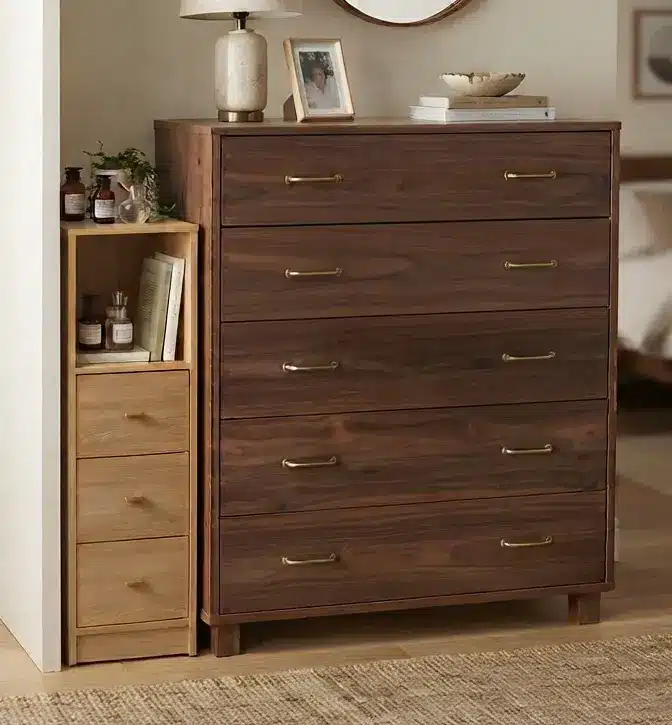
The idea behind the 80% cabinet proportion method is actually pretty simple once you see it in real spaces. Instead of trying to perfectly fill every inch of a wall or niche, you intentionally scale the cabinet slightly smaller—usually around 80 to 85 percent of the available space.
At first, this might sound like you’re wasting space. But in real interior design, the opposite is often true. Cabinets that are slightly “looser” in their fit tend to look more intentional and visually calm. There’s a bit of breathing room around the edges, and that small detail makes the whole installation feel more expensive and well thought out.
This approach is especially useful when working with built-in cabinets. Unlike freestanding furniture, built-ins become part of the architecture, so even small proportion mistakes are very noticeable. A cabinet that is too tight against the wall can feel forced, while one that is slightly reduced in size tends to blend more naturally into the room.
What makes this method useful is that it doesn’t require design experience. You’re not guessing aesthetics—you’re just adjusting proportions slightly and letting the visual balance do the work. In most cases, this small adjustment is enough to fix that “something feels off” problem people often notice without knowing why.
| 2:1 ~ 3:1 | Great for display cabinets. Standard handles work well. Feels balanced and visually familiar in most interiors. |
| 3:1 ~ 4:1 | One of the most balanced cabinet proportions for living spaces. Works well in modern, minimal environments. |
| 4:1 ~ 5:1 | Vertical emphasis becomes important. Longer handles or minimal hardware help maintain proportion clarity. |
| 5:1 ~ 6:1 | Slim utility-focused proportions. Best with clean surfaces and minimal visual interruptions. |
| 6:1+ | Tall, narrow cabinets often look best with push-to-open or recessed hardware. Clean front surface is essential for visual balance. |
Niche Efficiency Visualizer
How to Tell If Your Cabinet Proportions Feel Off
Sometimes you don’t need measurements or formulas to know something isn’t working.
You can usually feel it the moment you walk into a room.
A cabinet might technically fit the space, but still feel too tall, too narrow, or just slightly heavy on one side. This is often the point where people start adjusting colors or hardware, when in reality the issue is much earlier in the design—the proportions themselves.
A simple way to check is to step back and look at the cabinet as a single shape instead of a storage unit. Ask yourself whether your eye moves naturally across it, or if it feels like one direction is being stretched too far.
This is exactly why tools like a cabinet ratio calculator are useful. They remove the guesswork and turn that “something feels off” moment into a clear number you can adjust.
Once you start seeing cabinets this way, it becomes much easier to understand why some designs feel calm and balanced, while others feel slightly uncomfortable even if everything is technically correct.
When it comes to cabinet design, what matters more—storage capacity or visual proportion?
Most design decisions come down to this balance, especially when using a cabinet ratio calculator to evaluate proportions before building.
Which side do you usually prioritize in your own space? Feel free to share your thoughts in the comments.