Biophilic design can be the difference between a productive sanctuary and a feeling of being trapped. I’m sitting here, staring at the same four walls I’ve been staring at for the last three years, and for the longest time, it felt like I was slowly losing my mind. You know that feeling—when you’ve been glued to your chair for six hours, your eyes are burning from the screen, and you feel like a literal cog in a machine? It’s not just a bad day; it’s a sense of persistent, low-level dread that seems to stick to your office walls.
For a long time, I blamed my heavy workload or the lack of sleep. I tried every trick in the book, from noise-canceling headphones to ergonomic chairs that cost as much as a used car. Nothing seemed to get rid of that “trapped” sensation until I rethought my home office design through the lens of biophilic design. At first, the concept sounded like another buzzworthy “wellness trend,” but the more I explored it, the more I realized it’s a practical, science-backed framework for aligning our workspace with our circadian rhythm. By stopping the fight against our own biology, we can finally start working in harmony with it.
Why Natural Light Is Your Biological Anchor
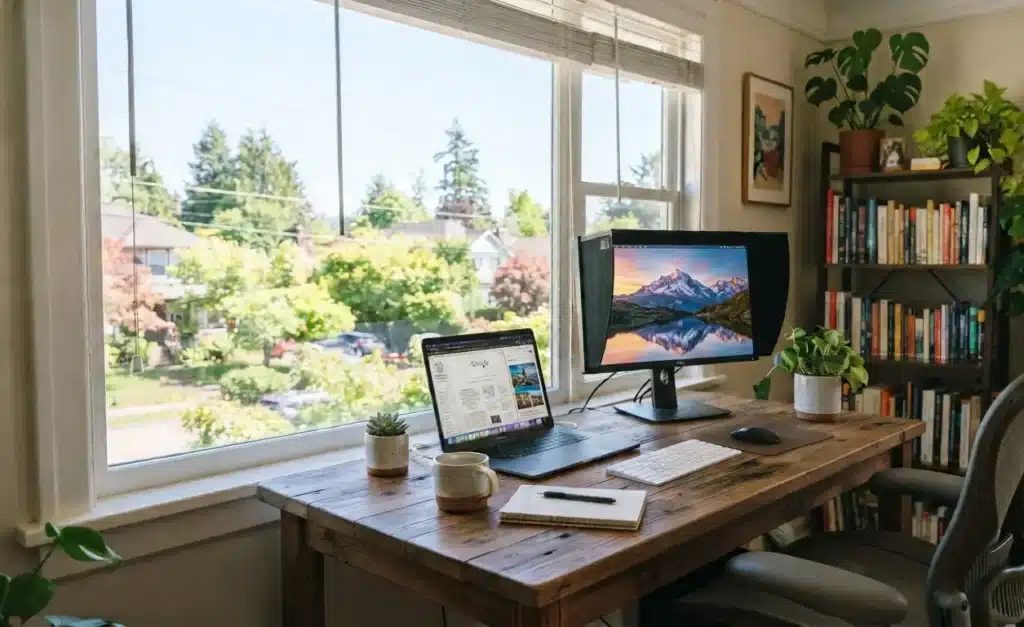
According to environmental psychology, our bodies rely on the circadian rhythm—an internal clock synchronized by light exposure—to regulate everything from cortisol levels to our sleep-wake cycles. When we spend all day in a “cave” with the blinds drawn to prevent screen glare, our internal clock gets confused, leading to that heavy, mid-afternoon energy crash.
Moving my desk to face the window was a massive help. The difference in my daily energy was honestly shocking. The 3 PM slump didn’t hit nearly as hard, and I found myself reaching for less caffeine just to stay alert. Having a focal point outside the window gave my eyes a place to rest, which noticeably reduced that dry, burning sensation I used to get after hours of staring at code. Just keep in mind that if you move your setup, you’ll want a monitor hood or decent blinds to handle the glare.
The Cognitive Science of Biophilic Design
It turns out that connecting to nature isn’t just about “feeling good”—it’s a structured approach to environmental wellness. If you’re curious about the mechanics behind this, the team at Terrapin Bright Green has laid out a comprehensive framework called the “14 Patterns of Biophilic Design.” It’s basically the gold standard for understanding how specific environmental cues help our nervous system recover from the daily grind.
Adding greenery is one of the most accessible ways to apply these patterns. When looking up from a complex spreadsheet, seeing something living—rather than just another pixelated UI—helps hit a “mental reset” button. I’ve noticed I can usually get through another deep-focus task before I feel that desperate, itchy urge to get up and pace around the room. For those worried about maintenance, hardy plants like Snake Plants or Pothos are effectively unkillable and provide that same benefit without the extra stress.
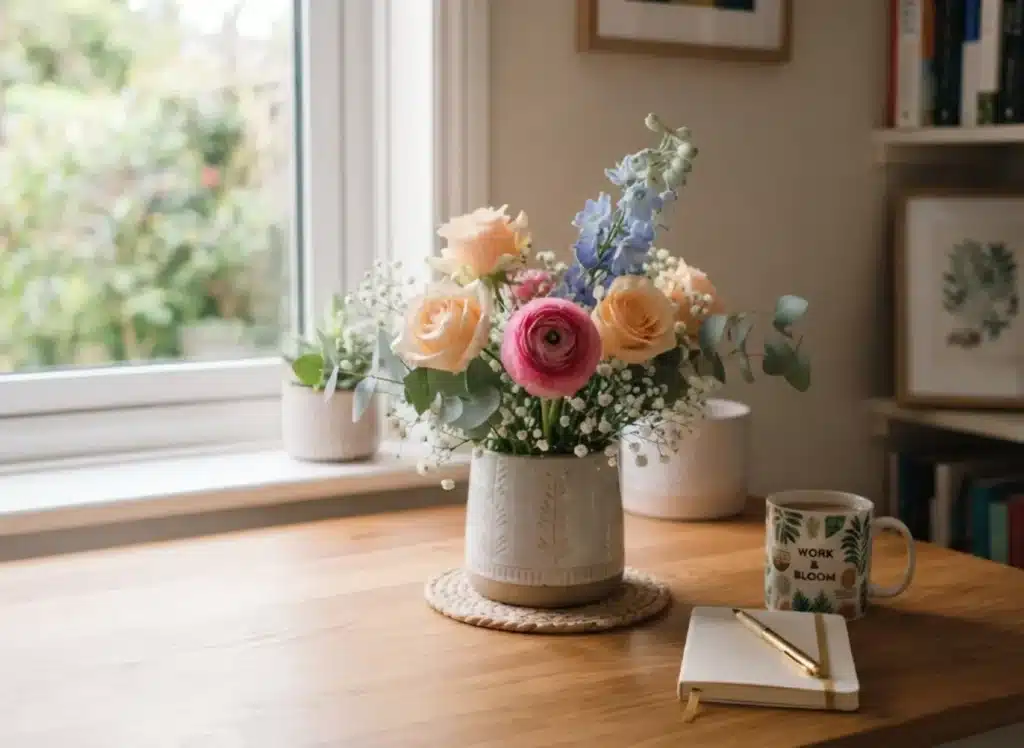
Acoustic Masking: The Truth About Water Features
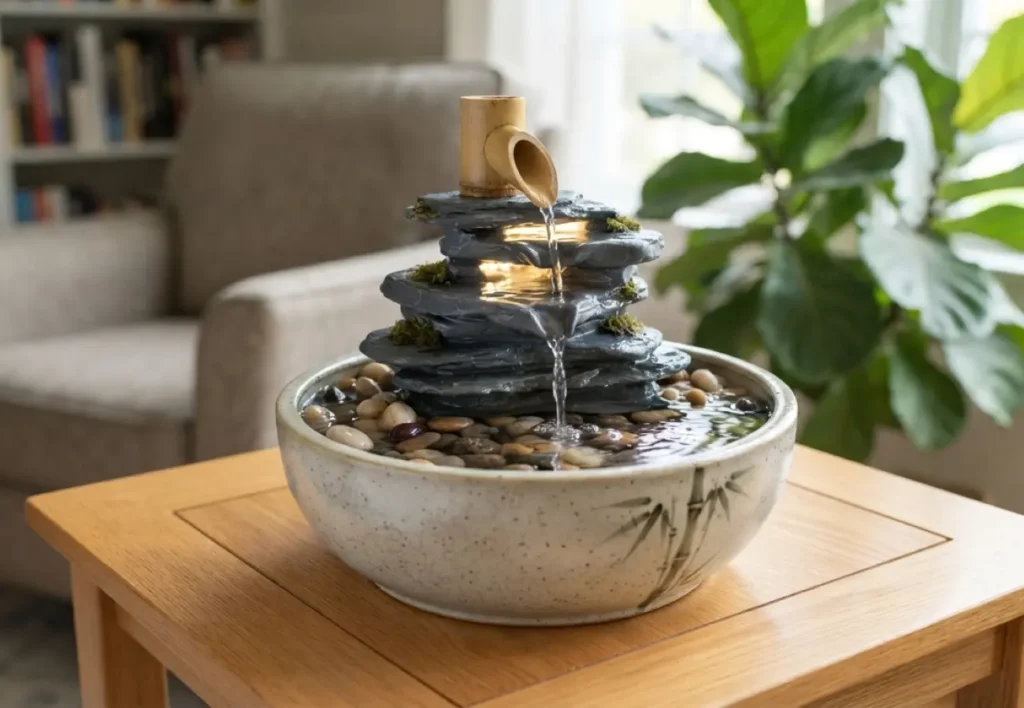
Biophilic design often suggests adding water to modulate the soundscape. From an acoustic perspective, the rhythmic, broadband frequency of running water acts as an acoustic mask, smoothing out erratic, high-frequency sounds like mechanical fan hums or distant traffic. This may help reduce the perceived stress caused by distracting background noise in many home office environments.
However, a word of warning: not all fountains are peaceful. Some low-quality units have pumps that vibrate against the plastic base, creating a harsh, grinding mechanical hum that is actually more distracting than total silence. If you decide to go this route, check the reviews specifically for “pump noise.” If you’re not willing to gamble on a cheap motor, don’t force it. A high-quality speaker playing a long-form, non-looped soundscape of a forest stream provides the same acoustic benefit without the risk of a rattling, noisy motor.
A Few Real-World Lessons
Biophilic design isn’t a cure-all for a high-stress job. My journey was about making small, calculated adjustments to my environment rather than expecting a total transformation.
- Move your desk: Prioritizing light was the biggest return for the least effort I’ve made all year.
- Pick the right plants: Choose low-maintenance varieties so they don’t become just another thing you have to worry about maintaining.
- Be picky with sound: If you buy a water feature, test the pump the second you get it. If it sounds like a tractor, return it—don’t try to “get used to it.”
These changes helped me end my workdays feeling slightly less drained, but they are just tools—not a replacement for taking real breaks.
Does biophilic design require a big budget?
Not at all. Repositioning your desk costs nothing, and budget-friendly plants or free nature soundscapes go a long way. Start small—the goal is to optimize your environment, not to overhaul your decor.
I’m notorious for killing plants. Any advice?
Stick to “unkillable” varieties like Snake Plants or Pothos. They are incredibly hardy, thrive in low light, and handle occasional neglect easily—perfect for a stress-free green boost.
Won’t facing a window cause terrible screen glare?
It’s a valid concern. The fix is simple: use a monitor hood or adjustable blinds. Once you manage the glare, the benefit of natural light as a focal point far outweighs the minor setup effort.
Does sound masking actually improve focus?
Yes, it smooths out erratic background noise. However, avoid cheap, vibrating fountain pumps, which can be more distracting than silence. A high-quality digital recording of a forest stream is often more effective and hassle-free.
Is this really going to boost my productivity?
Think of it as an environmental foundation rather than a magic pill. By removing the biological stress of a “cavelike” office, you stop wasting mental energy just to stay alert, allowing you to focus on the work that actually matters.
Have you tried adding any natural elements to your workspace—and did it actually make a difference? Let me know in the comments. Especially if you’ve managed to find a water feature that actually runs silently.