Light Reflection is the secret key to unlocking the potential of any small space. By mastering how light bounces and travels through your home, you can easily trick your eyes into perceiving a room that feels vastly larger, brighter, and more open than it really is.
Many homeowners feel the weight of their own walls. We often dream of knocking down partitions to escape that cramped feeling, but the most effective way to change the size of your room isn’t a sledgehammer—it is the strategic use of Light Reflection. This isn’t just some abstract interior design theory; it is a practical way to optimize your interior layout and turn a tiny studio into an airy oasis. Whether you are working with a limited budget or simply want to maximize your current environment, mastering these principles to create a sense of spatial depth is the most efficient way to make your room breathe again.
1. Creating Depth with Strategic Design
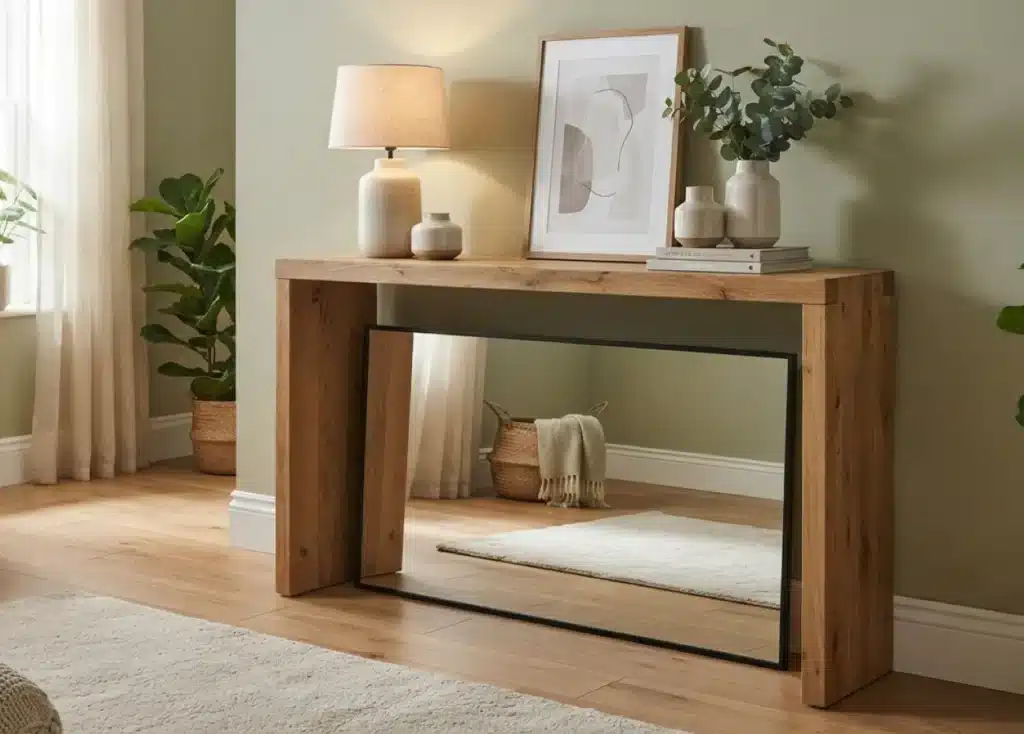
When we walk into a room, our brains perform a lightning-fast calculation: “Where do the walls end?” We judge the size of a room based on where our eyes stop. Light Reflection is the ultimate hack for creating the illusion of space. To truly use this to your advantage, you need to focus on visual continuity.
Place your mirrors to reflect a “way out”—a window or a doorway. When the lines of your flooring seem to continue inside the mirror, you are telling your brain that there is a secret room hidden behind that wall. Pro tip: Try placing a mirror near the floor behind a console table. This creates a “floating” effect, making heavy furniture look like it is hovering, which helps in expanding small spaces by removing visual weight from the floor.
2. Maximizing Natural Light and Daylighting
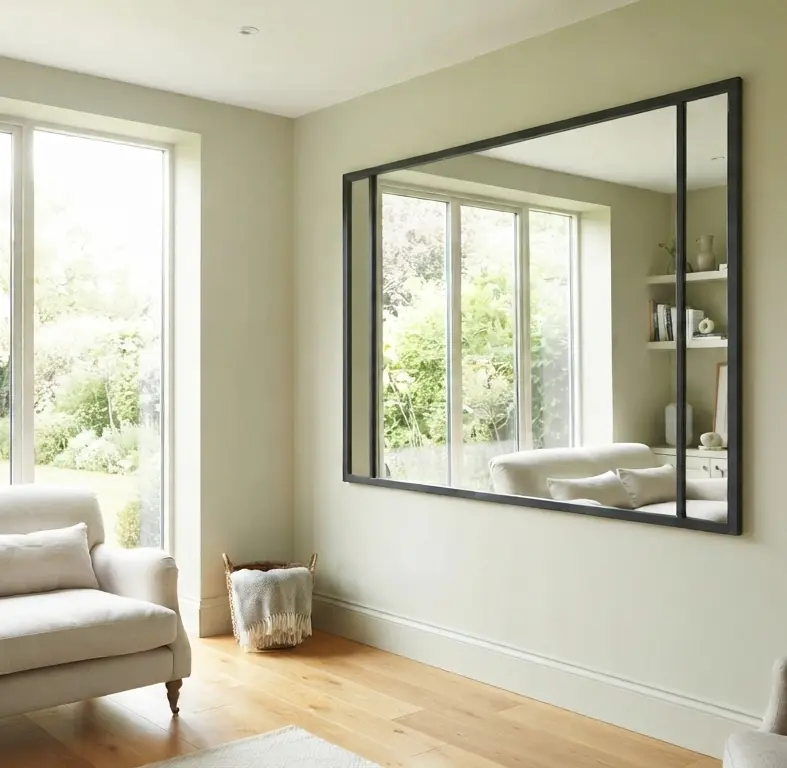
One of the most persistent reasons rooms feel tiny is the presence of shadows. To combat this, you need to master natural light diffusion and effective daylighting techniques.
Daylighting isn’t just about having windows; it’s about harvesting the light and spreading it to every dark nook of your house. When you place a reflective surface opposite a window, you create a secondary light source through Light Reflection. However, be careful about the “glare factor.” If you want a softer vibe, look for mirrors with a matte frame that softens the intensity. When every corner is bathed in a uniform brightness, the harsh edges of your room seem to blur, making the space feel significantly larger.
3. Fenestration and the Architecture of Light
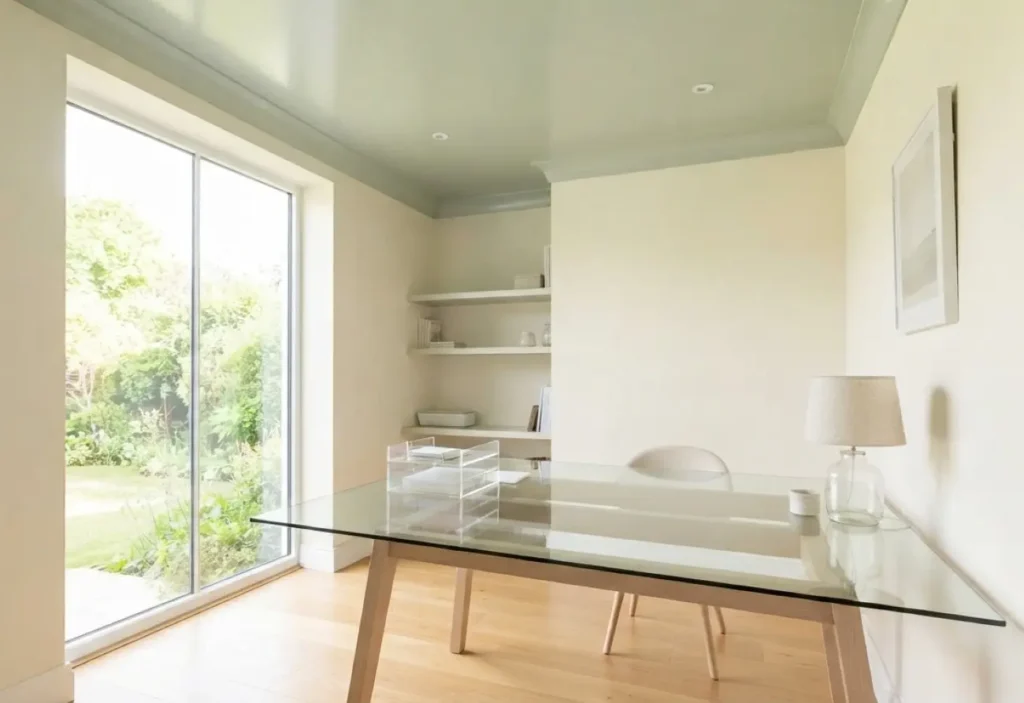
In professional design, fenestration—how your windows are arranged—is key. Even if you cannot change your windows, you can mimic their effect using interior design choices that promote Light Reflection.
If you have a massive, dark desk, consider covering it with surfaces that promote clarity, such as glass or high-gloss finishes. When a piece of furniture reflects the color of your walls, it essentially “disappears” into the room. It stops being a space-eating object and becomes part of the background. Furthermore, painting your ceiling with a semi-gloss finish acts as a giant reflector, bouncing ambient light back down, which helps in expanding small spaces by increasing the perceived height.
4. Layering Light to Expand Spatial Boundaries
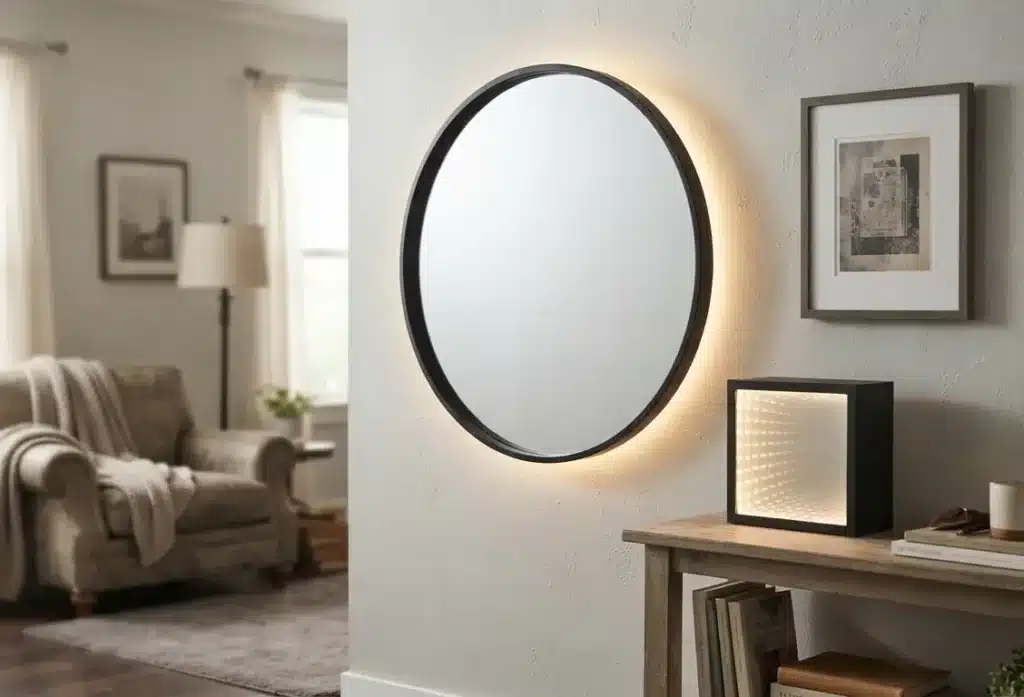
If you rely only on a single overhead light, you are doing your room a disservice. To truly expand your home, you need to think about layering light to enhance Light Reflection.
Using LED strips behind a mirror creates a glow that adds depth between the object and the wall. This effect, often associated with high-performance building strategies, creates a layer that tricks the eye into seeing more depth. If you want to go bold, consider an “infinity mirror” setup. It creates a tunnel effect that appears to go on for miles, which is an incredible way to turn a dead-end spot into an art piece that pushes your spatial boundaries.
5. Smart Placement and Glare Control
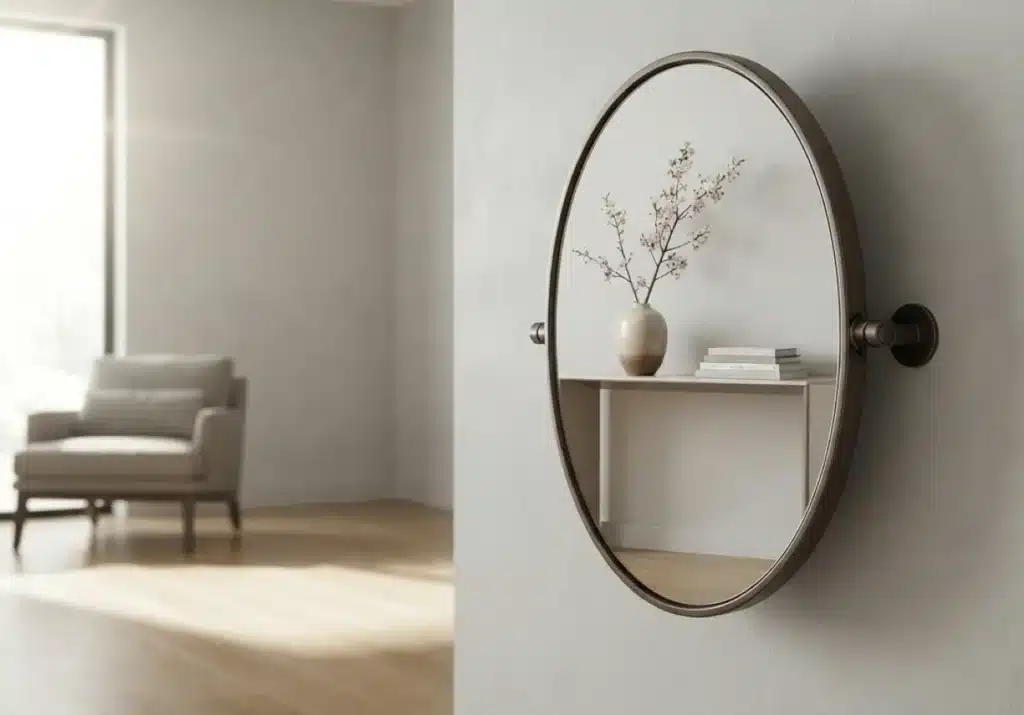
As effective as these techniques are, you must be a mindful curator of what you are reflecting. Mirrors are honest—they will reflect everything, so curate your environment to show only clean, open views.
This is about managing the “information load” of your room. By curating what you reflect, you maintain a sense of calm. Lastly, pay attention to the angle. If the afternoon sun strikes you in the eyes, that’s a fail. A tiny, 5-degree adjustment—tilting the mirror slightly—can redirect Light Reflection to be a benefit rather than an annoyance. It is these small adjustments that optimize your room layout for both style and comfort.
Space Luminance Planner
0.2 = Dark walls or dark wood
0.3–0.4 = Gray walls or medium-tone wood
0.5 = White or light beige walls (Recommended)
0.6–0.7 = Bright white paint or light-colored tiles
0.8–0.9 = Mirrors or glossy white finishes
FAQ
Where is the most effective place to position a mirror?
The best spot for a mirror is on a wall directly opposite a window. This placement allows the mirror to catch natural light and bounce it back into the deeper, darker parts of the room. Always aim the mirror toward an open view or an attractive piece of decor to maximize the sense of openness.
Are there interior elements I should avoid when using light reflection?
You should avoid using dark, matte-finished furniture that absorbs light, as it can make a space feel smaller. It is also crucial to ensure your mirrors are not reflecting a cluttered area, such as a pile of laundry or a messy desk. Reflecting visual chaos will only double the sense of confinement in your room.
Does the finish of my ceiling paint affect how big a room feels?
Yes, it makes a significant difference. Using a semi-gloss or satin paint on the ceiling instead of a flat matte finish helps reflect ambient light back down into the room. This subtle change can create an optical illusion of a higher ceiling, making the entire room feel much airier and less boxy.
What should I keep in mind when adding LED lighting?
The goal is to use indirect lighting to avoid harsh glare. By installing LED strips behind a mirror or under a piece of furniture, you create a soft, glowing light that adds depth to the walls. This layered approach creates a sophisticated atmosphere that effectively blurs the room’s hard boundaries.
Are there other simple tips for maximizing natural light in small rooms?
Try replacing heavy, opaque curtains with lightweight, sheer fabrics that allow light to filter through while maintaining privacy. Additionally, incorporating glass-topped tables or high-gloss decor near your windows can help distribute sunlight more evenly. These small adjustments can dramatically improve the brightness and perceived size of your home.
Ready to Transform Your Home?
Making your home feel larger isn’t about buying new stuff or expensive renovations. It’s about being smarter with the light you already have. By applying these Light Reflection techniques, you can turn any cramped corner into an open, inviting oasis.
Take a look at your room today. Find that one dark corner. Start by placing a simple, elegant mirror there, and you will be surprised at how much bigger the room feels instantly. If you are struggling with a specific layout, don’t hesitate to reach out! Let’s design a space that truly breathes.